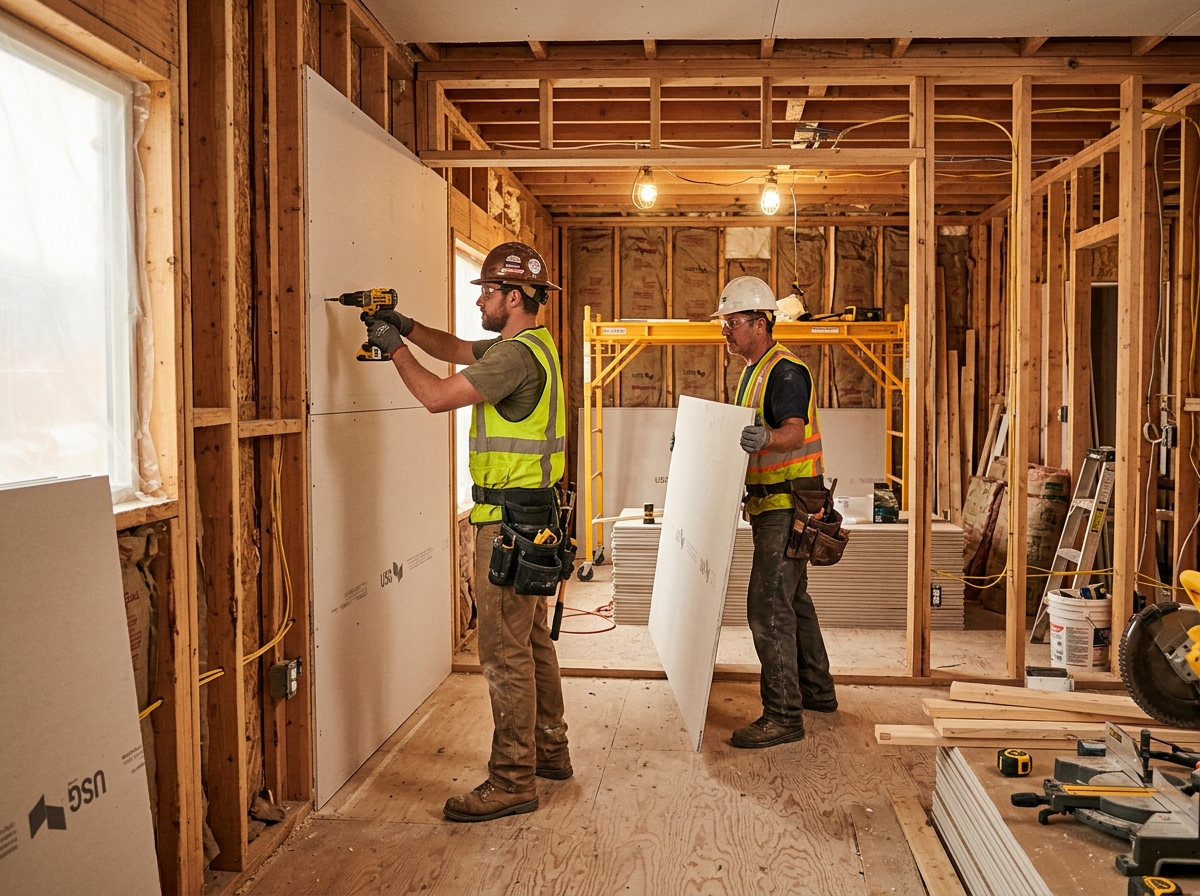
Also referred to as Accessory Dwelling Units, ADUs have gained popularity with homeowners seeking versatile accommodations and future property value. The smaller secondary homes can be constructed in backyards, garages, or attached areas in order to have a diverse range of residential applications. Knowing the pros and consof ADUs helps homeowners understand whether this sort of project is a worthwhile investment in their property or not. Having professional advice from DTI Construction Inc., the homeowner would be in a better position to analyze Accessory Dwelling Unit Benefits, ADU Investment Pros and Cons, and strategize on realistic ADU Construction Costs.
Pros and Cons of ADUs that homeowners should know
It is important to comprehend the Advantages and Disadvantages of ADUs prior to commencing construction.
Added living areas, rental, and flexibility of property are provided by ADUs, although they must be planned, budgeted, and adhere to local building codes. This choice frequently hinges on the financial objectives, property space, and needs in the long run.
Balance is an evaluation that enables homeowners to make sound judgments.
Accessory Dwelling Unit Benefits for Modern Homeowners
Accessory Dwelling Unit Benefit: versatility is one of the largest.
ADUs may be used as guest houses, rental apartments, home offices, multigenerational homes,s or personal quarters of elderly relatives. This allows them to be of great value in the fluctuating housing markets.
ADU also enables many homeowners to enhance the functionality of their properties without necessarily buying extra land.
ADU Rental Income Potential and Financial Advantages
One of the primary reasons why homeowners are investing in these buildings is the strong ADU Rental Income Potential.
ADU will be able to collect rental income that will cover mortgage repayments, property tax, and maintenance expenses every month. Rental units can generate long-lived financial returns in high housing demand areas and maximize property value.
ADUs are also used as short-term vacation rentals in some cases, by homeowners as regulations permit.
Backyard Home Unit Benefits and Property Flexibility
It has numerous Backyard Home Unit Benefits to offer those homeowners who wish to have more space.
The detached backyard units are not only a way of privacy, but they are also near the main home. They establish adaptable living as the adult offspring, elderly, and elderly parents or long-term visitors without the need to sacrifice independence.
Outdoor Backyard units maximize unused space as well.
ADU Investment Pros and Cons from a financial perspective
There are also key ADU investment advantages and disadvantages to be considered, like any other property upgrade.
Additional benefits common to pros are higher property value, renting, and better housing. But construction costs, building permits, plumbing, and general maintenance should also be taken into consideration by homeowners.
Financial planning is required to make the long-term investments successful.

ADU Construction Costs and budgeting factors
Realistic ADU construction costs can be essential in finding out the project cost before commencing.
The prices differ in accordance with the size, construction design, site, utilities, and the complexity of the construction. Conversion of smaller garages can be much cheaper than complete detached and bespoke properties. The overall costs are also influenced by labor rates, permits, site preparation, and the choice of materials.
Depending on the scope, many projects at ADU can be as little as tens of thousands of dollars to as many as several hundred thousand dollars.
Zoning laws and permit considerations
Local zoning laws make a significant contribution to ADU development.
City and county regulations may include particular regulations about unit size, parking, setbacks, occupancy maximums, and utility access. Certain regions promote the development of ADUs, whereas other areas have severe restrictions.
Professional contractors assist the homeowners with permitting and compliance issues in a much easier manner.
Increased property value and resale appeal
In most markets, an ADU can enhance property value in the long-term.
An additional living area can always enhance the interest of buyers, particularly in locally challenged areas facing housing scarcity or living with multiple generations. Legally designed, well-established ADUs on properties could be competitive in the real estate market.
The gain in the resale value is determined by the quality of building construction and neighborhood status.
Privacy and lifestyle considerations
AdUs are convenient, but the homeowners must also take into consideration the issue of privacy.
Having to share property space with renters or the extended family can lead to loss of privacy for both sides. Other issues, such as availability of parking, noise, and sharing of outdoor area, may also be problematic unless layouts are done with the appropriate concern.
Consideration in the design enables better comfort and segregation of living space.
Maintenance and long-term responsibilities
There are also other maintenance liabilities that are associated with owning an ADU.
Individual utilities, plumbing, roofing, and appliances are all subject to continuous maintenance. Rental units may also entail the tenants’ management and legal duties that are subject to local laws.
Maintenance helps to safeguard property value and maximize satisfaction in the tenants.
Sustainability and housing efficiency benefits
More sustainable housing solutions can be supported by ADUs.
Living spaces are usually smaller, and they require less energy and fewer building materials than traditional homes. Another solution enforced by ADUs is the higher-density housing, where the neighborhood development does not need to be large.
This will render them appealing to the eco-friendly homeowners.
Final thoughts
Professionally guided by tTI Construction Inc, homeowners would be able to develop efficiently and functionally designed ADUs that enhance the flexibility of the property, increase valuation in the long run, and serve modern-day life necessities.
Being aware of the pros and cons of ADUs will guide homeowners in making more informed choices regarding the addition of secondary living spaces on the estate. Out of good Accessory dwelling unit benefits and high ADU Rental income potentials, key to a successful project are meticulous planning of the project with the many ADU Investment pros and cons, and viable ADU Construction costs.
FAQs
1. What are the key Strengths and Weaknesses of ADUs?
ADUs also have additional space and rental revenues, but at a cost of construction and maintenance.
2. What are typical (Accessory) Dwelling Unit Benefits?
It has such advantages as versatile living, property necessity, and renting possibilities.
3. How much does the ADU Rental Income Potential look like?
In most housing markets, monthly rental income is often considered a sure way to generate a steady cash flow and is accomplished in part by the ADU.
4. What are the factors that impact the ADU Construction Costs?
Size and design of the project, permit, labor and utilities, and site conditions all have an impact on total cost.
5. Do the advantages of Backyard Home Units outweigh their costs?
The advantage of backyard units in the long run is that some homeowners have the foresight to invest them for added flexibility and profit.